Designed for mid-century modern enthusiasts seeking authentic period aesthetic without vintage furniture's maintenance challenges (wood wear, joint instability, dated upholstery), Scandinavian design admirers valuing functional minimalism and natural materials, small-space dwellers requiring lightweight stackable-adjacent seating (easily moved for cleaning or rearranging), café and restaurant owners needing durable commercial-grade chairs with designer aesthetic at accessible pricing, interior designers specifying iconic recognizable furniture for residential or commercial projects, and anyone rejecting ornate traditional dining chairs in favor of clean sculptural forms that age gracefully, this chair represents mid-century modernism's core philosophy—beautiful functional objects accessible to all, not luxury reserved for elite.
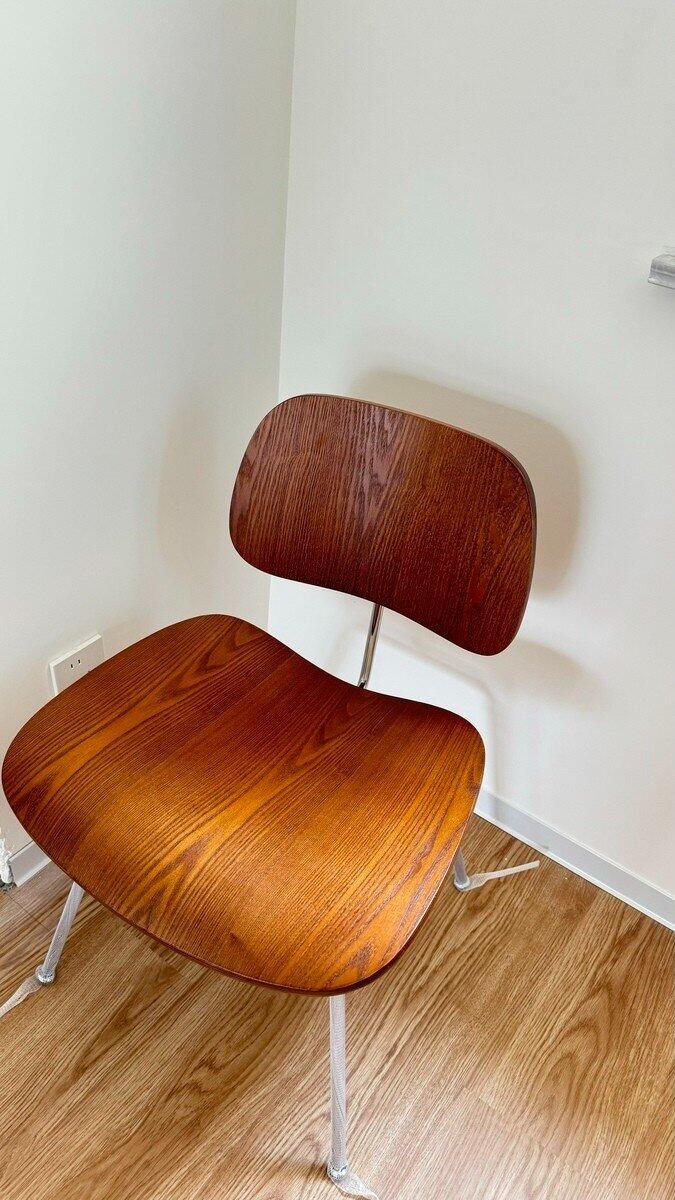
The molded plywood bentwood construction represents the chair's defining technical and aesthetic innovation—this manufacturing technique revolutionized furniture design in the 1940s-50s:
Historical context:
-
Charles and Ray Eames pioneered mass-produced molded plywood chairs (1946 LCW and DCW chairs)—"technology democratizing design"
-
Arne Jacobsen created the iconic Series 7 chair (1955)—best-selling chair in furniture history (7+ million sold)
-
Mid-century philosophy: Industrial manufacturing enabling beautiful affordable furniture for middle-class homes (versus handcrafted artisan pieces only wealthy could afford)
Technical process:
-
Steam-bent or pressure-molded plywood: Multiple thin wood veneer layers (typically 7-11 layers) glued and pressed into three-dimensional curved form under heat and pressure
-
Structural advantages: Cross-grain layering creates exceptional strength-to-weight ratio—thinner and lighter than solid wood while resisting cracking, warping, and splitting
-
Ergonomic shaping: Molding process enables complex curves impossible with solid wood—creates body-conforming seat and backrest contours
Performance benefits:
-
Ergonomic support: Gentle curvature cradles hips and buttocks preventing hard-flat-surface discomfort, subtle lumbar support maintains natural spine alignment
-
Lightweight durability: 4-5 kg weight enables effortless repositioning, yet molded plywood withstands 250-300 lb loads without flexing
-
Dimensional stability: Layered construction resists moisture-induced warping better than solid wood—maintains form through humidity changes
-
Aging gracefully: Natural wood grain visible through finishes develops rich patina over years—furniture improves aesthetically with age versus showing deterioration
-
Repairability: Minor scratches or dents can be sanded and refinished (unlike plastic or upholstered chairs requiring replacement)
The single-piece continuous backrest-to-seat design (versus separate backrest and seat joined with hardware) creates structural integrity and visual elegance—no visible joints or mechanical connections interrupting flowing form.
The gentle ergonomic curvature provides comfort without excessive cushioning:
Seat contour:
-
Central depression: Subtle dip in seat center cradles buttocks preventing sliding forward—natural "pocket" positioning body securely
-
Side-to-side curve: Gentle concave shaping wraps around sides of hips providing lateral support
-
Front edge relief: Downward curve at front prevents pressure on back of thighs (common complaint with flat chairs)—maintains healthy circulation during extended sitting
Backrest support:
-
Lumbar curve: Lower backrest follows natural inward curve of lumbar spine—supports lower back without forcing exaggerated posture
-
Height optimization: Backrest height (approximately 30cm above seat) supports mid-back comfortably for dining without excessive height that would obstruct cross-table conversation or feel overly formal
-
Recline angle: Slight backward angle (approximately 5-10 degrees from vertical) creates relaxed seating posture—comfortable for both upright dining and slightly reclined working
The 43cm seat height is standard dining chair dimension—coordinates with typical dining tables (72-76cm height) and works for desk applications (72-75cm desks). This height accommodates users approximately 5'2" to 6'2" (157-188cm) comfortably with feet flat on floor.
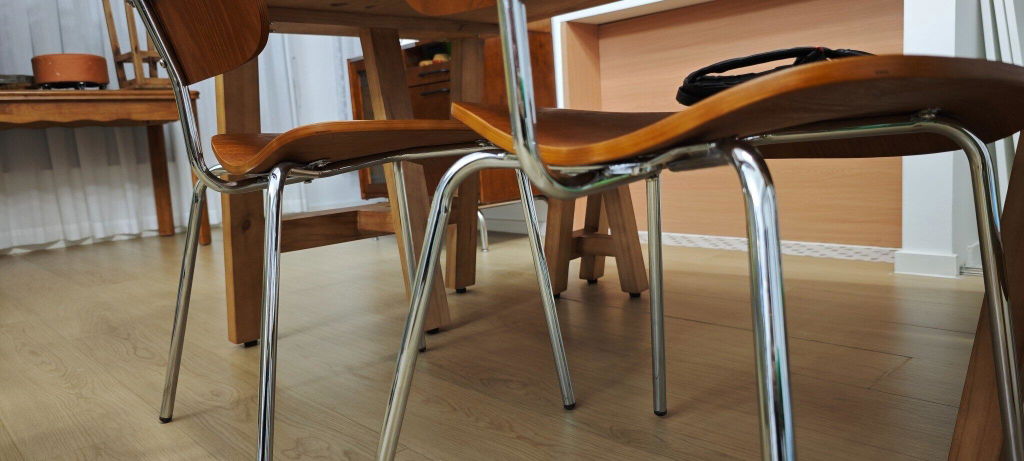
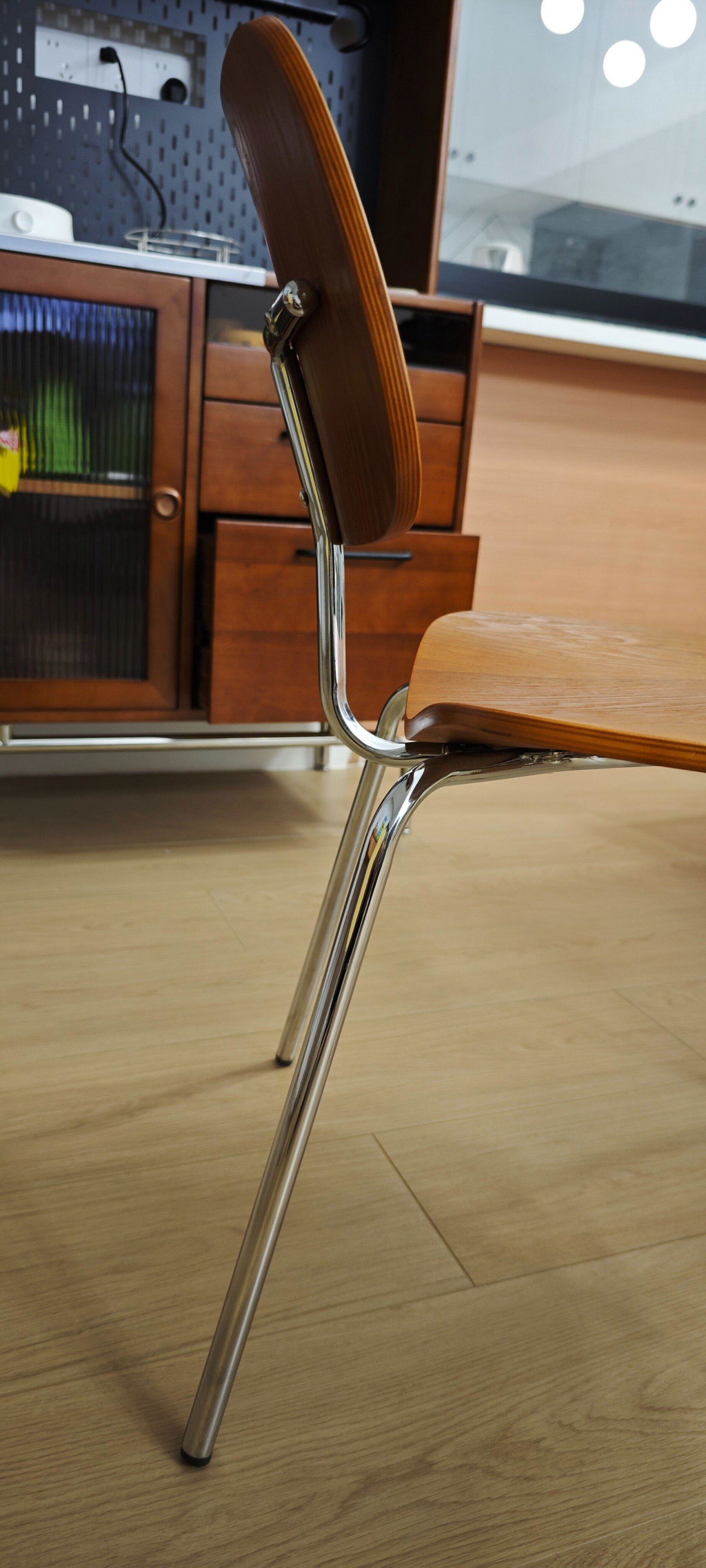
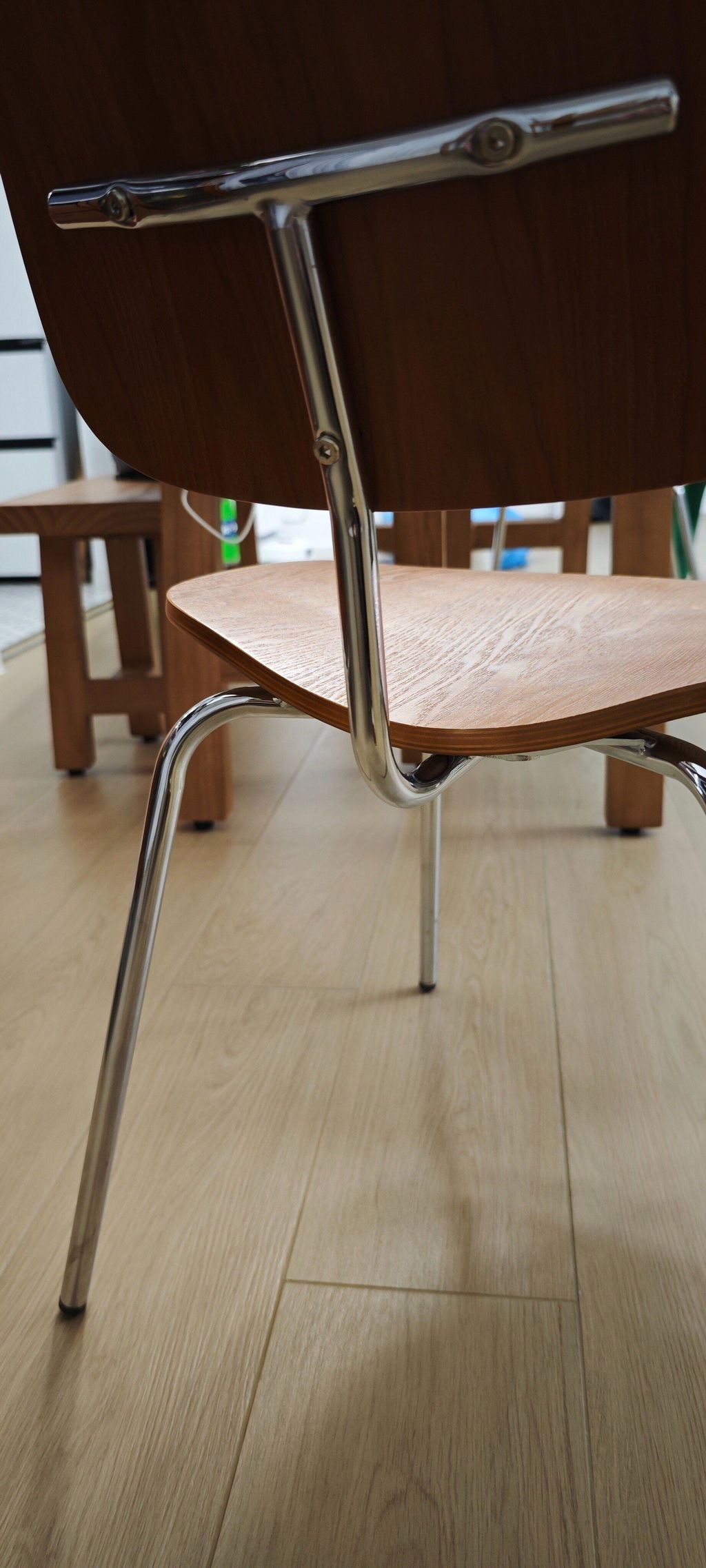
The reinforced triangular steel under-frame distinguishes this design from budget chairs using simpler straight-bar construction:
Structural engineering:
-
Triangular geometry: Creates inherent structural rigidity—triangles don't flex or deform under load (versus rectangles/squares that can rack and wobble)
-
Load distribution: Directs seating weight from center down through multiple load paths to all four legs—prevents concentrated stress on single joints
-
Enhanced capacity: Reinforced frame likely increases weight capacity to 250-300 lbs (113-136 kg) versus 200-220 lbs typical for non-reinforced designs
Durability benefits:
-
Prevents wobbling: Triangular bracing resists the loosening and joint wear that causes chairs to become wobbly after years of use
-
Commercial-grade performance: Suitable for moderate commercial use (cafés, offices) with 3-5 year lifespan versus residential-only designs
-
Repair avoidance: Strong initial construction minimizes need for joint re-gluing or tightening over furniture's 10-15+ year lifespan
The metal legs with two finish options enable aesthetic customization:
Black metal legs (powder-coated):
-
Modern industrial aesthetic: Matte or satin black finish creates contemporary edge—coordinates with modern minimalist, industrial-chic, Scandinavian noir, monochrome interiors
-
Visual grounding: Dark legs anchor chair creating solid foundational appearance—prevents "floating" look
-
Versatility: Black is neutral coordinating with any wood tone or color palette
-
Stain concealment: Hides scratches, scuffs, and wear better than lighter finishes
Silver/Chrome metal legs (polished or brushed):
-
Classic mid-century aesthetic: Reflects authentic 1950s-60s chair designs (Eames, Jacobsen) which predominantly featured chrome legs
-
Light-reflecting brightness: Polished chrome reflects light creating airy spacious feel—particularly valuable in small or dark dining spaces
-
Retro authenticity: More historically accurate to mid-century period—appeals to purist collectors and vintage aesthetic enthusiasts
-
Contemporary relevance: Brushed or satin chrome finishes (versus high-gloss) feel contemporary rather than dated
Leg finish selection guidance: Black legs are more versatile and contemporary—safe choice for modern homes. Chrome legs are more historically authentic mid-century—choose if committed to period aesthetic or want light-reflecting brightness.
The three premium wood finish options enable interior color coordination:
-
Natural Oak (Light Natural Wood): Pale warm honey or blonde tone showcasing natural oak grain—most authentically Scandinavian, coordinates with light airy Nordic aesthetics, pairs with white walls and natural materials. Creates bright cheerful atmosphere. Most versatile for frequent décor changes (neutral light foundation).
-
Walnut (Rich Medium-Dark Brown): Deep chocolate or espresso tone with visible grain depth—classic mid-century modern favorite (walnut was THE premium wood of 1950s-60s American design), coordinates with warm palettes and brass/gold accents. Creates sophisticated grounded presence. Timeless choice transcending trends.
-
Black (Matte Ebony Stain): Dramatic opaque black finish (grain still subtly visible)—contemporary edge suitable for modern minimalist and monochrome schemes, coordinates with black metal legs for unified monolithic appearance. Creates bold statement. Most forgiving for visible wear (scratches less noticeable on dark surfaces).
Wood finish selection guidance: Natural Oak is brightest and most Scandinavian. Walnut is most classically mid-century (period-authentic). Black is most contemporary and dramatic. For mixed chair sets, use 70-80% primary finish + 20-30% accent finish (e.g., 4 Walnut + 2 Natural at table ends).
The protective anti-scratch foot pads prevent floor damage—soft rubber or felt pads on bottom of each leg create barrier between metal and flooring. Critical for hardwood, tile, laminate, and vinyl floors susceptible to scratching from metal contact during repositioning. Replace pads every 12-18 months as they compress or wear through.
The lightweight construction (approximately 4-5 kg per chair) enables practical daily use:
-
Effortless repositioning: Single-hand lifting and moving for floor cleaning, rearranging during parties, carrying between rooms
-
Elderly-friendly: Older users can comfortably move chairs without strain (wood/metal chairs weighing 8-12 kg require two hands and effort)
-
Commercial efficiency: Restaurant and café staff can quickly reset dining configurations
-
Storage flexibility: Easily carry chairs to storage locations (basements, closets) for seasonal or event-driven needs
Despite lightweight feel, the reinforced frame and molded plywood provide adequate strength for 250-300 lb capacity—doesn't feel flimsy or unstable.
The compact footprint (50.5cm W × 48.5cm D) fits tight spaces:
-
Small dining areas: Tuck chairs fully under table when not in use—4-6 chairs fit around small 100-120cm round tables or 140-160cm rectangular tables without overcrowding
-
Café efficiency: Maximize seating density without cramped feeling—important for commercial spaces prioritizing revenue per square meter
-
Multi-purpose rooms: Dining chairs that don't dominate studio apartments or open-plan kitchen-living spaces
The compact dimensions combined with lightweight make these chairs excellent for apartment living—easily moved, don't visually overwhelm small spaces, fit tight corners.
Quick simple assembly (10-15 minutes per chair):
- Remove seat/backrest assembly from packaging (arrives as single piece)
- Attach four metal legs to pre-drilled mounting points on under-frame
- Hand-tighten bolts, then use included Allen wrench to secure
- Attach protective foot pads to leg bottoms
- Done—chair ready for use
No specialized skills required—one person can manage, though second person helps stabilize chair during bolt tightening. For multiple chairs, assembly-line approach speeds process (attach all front legs, then all back legs, then all pads)—budget 10 minutes per chair after first one.
Versatile application scenarios:
Residential:
-
Dining rooms: Primary dining chairs (matching sets of 4-8) or mixed with other mid-century pieces
-
Kitchen dining nooks: Compact footprint fits breakfast tables in small kitchens
-
Home offices: Desk chair alternative to utilitarian office chairs—inspires creative work with iconic design
-
Reading nooks: Comfortable seating for 30-90 minute reading sessions
-
Entryways: Occasional seating for putting on shoes (lightweight enables moving to wall when not needed)
Commercial:
-
Cafés and coffee shops: Authentic mid-century aesthetic creating Instagram-worthy interiors, durable construction withstands commercial use
-
Restaurants: Designer dining chairs signaling quality and attention to aesthetic—competitive with $250-400 commercial dining chairs
-
Co-working spaces: Hot desking, conference rooms, collaboration zones—lightweight enables flexible configurations
-
Creative studios: Advertising agencies, design firms, photography studios—furniture reflecting creative values
-
Boutique retail: Fitting rooms, consultation areas, waiting zones—sophisticated customer experience
-
Corporate offices: Conference rooms, break rooms, visitor seating—professional appearance
Style compatibility: This design is foundational to multiple aesthetics:
-
Mid-Century Modern (authentic 1950s-60s aesthetic—core piece)
-
Scandinavian/Nordic (functional minimalism, natural materials, clean lines)
-
Contemporary Minimalist (edited no-frills design, emphasis on form and function)
-
Industrial-Chic (metal legs + wood = material honesty)
-
Retro/Vintage (nostalgic callback to post-war optimism and design innovation)
-
Eclectic Modern (iconic recognizable piece anchoring diverse mix)
Key Features
-
Iconic Molded Plywood Bentwood Construction: Single-piece sculpted seat and backrest with 7-11 layer cross-grain veneer—exceptional strength-to-weight ratio, ergonomic body-conforming curves, resists warping and cracking, develops rich patina aging gracefully
-
Gentle Ergonomic Curvature: Subtle seat contour cradles hips preventing sliding, side-to-side curve provides lateral support, front edge relief maintains circulation, lumbar backrest supports natural spine alignment—comfortable 60-120 minute dining or working
-
Reinforced Triangular Steel Under-Frame: Inherent structural rigidity, distributes load through multiple paths, prevents wobbling and joint loosening, 250-300 lb capacity, commercial-grade durability for 10-15+ years
-
Two Metal Leg Finish Options: Black (modern industrial versatile) or Silver/Chrome (classic mid-century light-reflecting)—coordinate with interior aesthetic preferences
-
Three Premium Wood Finishes: Natural Oak (light Scandinavian), Walnut (classic mid-century), Black (contemporary dramatic)—warm neutral to rich dark tones
-
Lightweight Construction (4-5 kg): Effortless single-hand repositioning for cleaning, rearranging, storage—elderly-friendly, commercial efficiency, doesn't compromise 250-300 lb strength
-
Compact Footprint (50.5×48.5cm): Fits small dining areas, tucks under tables, maximizes café seating density, doesn't overwhelm apartment spaces
-
Protective Anti-Scratch Foot Pads: Soft rubber or felt pads prevent floor damage on hardwood, tile, laminate—replace every 12-18 months
Specifications
| Specification |
Details |
| Product Name |
Mid-Century Modern Bentwood Dining Chair with Chrome/Black Metal Legs |
| Design Style |
Mid-century modern / Scandinavian / Minimalist / Retro 1950s-60s |
| Overall Dimensions |
50.5 cm W × 48.5 cm D × 73 cm H (19.9" × 19.1" × 28.7") |
| Seat Height |
43 cm (16.9")—standard dining chair height |
| Seat Dimensions |
Approximately 42 cm W × 40 cm D (ergonomic contours reduce flat measurement) |
| Backrest Height Above Seat |
Approximately 30 cm (11.8") |
| Seat & Backrest Material |
Molded plywood (7-11 layer cross-grain veneer construction) |
| Seat Finish |
Natural wood texture with curved ergonomic contour |
| Wood Finish Options |
Natural Oak (light honey blonde), Walnut (rich chocolate brown), Black (matte ebony stain) |
| Under-Frame Material |
Reinforced triangular steel structure |
| Leg Material |
Metal steel (tubular or solid) |
| Leg Finish Options |
Black (powder-coated matte/satin) or Silver/Chrome (polished or brushed) |
| Leg Tips |
Protective anti-scratch foot pads (soft rubber or felt) |
| Weight Capacity |
Estimated 250-300 lbs (113-136 kg) |
| Chair Weight |
Approximately 4-5 kg (8.8-11 lbs)—lightweight for easy moving |
| Assembly |
Quick simple attachment of legs (10-15 minutes)—hardware and Allen wrench included |
| Maintenance |
Wipe wood with damp cloth, use wood polish/conditioner every 6-12 months, replace foot pads annually |
| Stackable |
No (molded backrest prevents stacking)—but lightweight enables easy storage |
| Recommended Use |
Dining rooms, kitchens, cafés, restaurants, home offices, creative studios, co-working spaces |
| Style Compatibility |
Mid-century modern, Scandinavian, contemporary minimalist, industrial-chic, retro vintage, eclectic |
| Expected Lifespan |
10-15+ years residential use with proper care, 5-8 years moderate commercial use |
| Warranty |
[Check with STOOLTOPIA for warranty terms] |
|
|
| Six Color Combinations |
Black wood + Black legs, Black wood + Silver legs, Walnut wood + Black legs, Walnut wood + Silver legs, Natural Oak + Black legs, Natural Oak + Silver legs |
Why Choose This Product?
-
Authentic Mid-Century Design Heritage: Molded plywood bentwood construction honors Eames/Jacobsen 1940s-50s innovation—owns iconic recognizable aesthetic transcending trends versus generic "inspired by" imitations
-
Ergonomic Comfort Without Bulky Cushioning: Sculpted curves support body naturally for 60-120 minute dining/working—minimalist elegance maintaining comfort versus bulky upholstered chairs that date quickly and require reupholstering
-
Reinforced Commercial-Grade Construction: Triangular steel under-frame provides 250-300 lb capacity and prevents wobbling—outlasts budget chairs with simple bar frames loosening within 3-5 years
-
Lightweight Practicality (4-5 kg): Effortless single-hand repositioning enables daily floor cleaning, event rearranging, seasonal storage—wood/metal chairs (8-12 kg) require two-hand effort straining elderly or smaller users
-
Two Leg Finishes + Three Wood Tones = Six Combinations: Precise aesthetic coordination with interior—not forced into single option or paying premium for custom finishes
-
Compact Footprint Maximizes Small Spaces: 50.5×48.5cm fits tight dining areas, small apartments, café seating density—doesn't sacrifice comfort for compactness
-
Timeless Design Ages Gracefully: Natural wood develops rich patina, molded plywood maintains structural integrity 10-15+ years—investment piece improving with age versus trendy chairs looking dated in 3-5 years
-
$148 Pricing = Designer Aesthetic Without Markup: Comparable mid-century molded plywood chairs retail $220-500—STOOLTOPIA delivers authentic design and commercial-grade construction at accessible pricing (4-chair set $592 vs. $880-2,000 elsewhere)
FAQ
Q: Is molded plywood as durable as solid wood chairs?
A: Molded plywood is often MORE durable than solid wood for chair applications. Advantages: (1) Strength-to-weight ratio—cross-grain layering (7-11 layers) creates exceptional strength while remaining lightweight, (2) Dimensional stability—resists moisture-induced warping, cracking, and splitting that affect solid wood (particularly in humid environments), (3) Uniform consistency—no wood knots or grain defects causing weak spots, (4) Flexible durability—slight flex under load absorbs stress rather than snapping (solid wood is rigid and can crack under impact). Expected lifespan: 10-15+ years residential use, 5-8 years moderate commercial use. Disadvantages: Severe impacts can delaminate layers (rare with normal use), cannot be deeply sanded and refinished like thick solid wood (but minor scratches can be touched up).
Q: How comfortable is this chair for extended sitting (2+ hours)?
A: Comfortable for dining and working (60-120 minutes), less ideal for extended lounging (2+ hours). The ergonomic curves support hips, buttocks, and lumbar spine better than flat chairs—prevents pressure points and maintains circulation. However, the firm wood surface (no cushioning) means extended sitting beyond 90-120 minutes may feel less comfortable than padded upholstered chairs. Best for: Dining (30-90 minute meals), desk work (1-3 hour focus sessions with breaks), café seating (20-90 minutes). Less ideal for: All-day office work without breaks (use ergonomic office chair with lumbar adjustment), extended reading/TV watching (use upholstered lounge chairs). Many users add thin seat cushions (1-2cm foam or fabric) for softer feel without compromising minimalist aesthetic.
Q: Which combination is most versatile: wood finish + leg finish?
A: Walnut wood + Black legs is most universally versatile—rich warm wood tone coordinates with diverse palettes (warm to cool), black legs anchor design creating grounded presence, combination works across mid-century modern, Scandinavian, contemporary, and eclectic styles. Second choice: Natural Oak + Silver/Chrome legs—authentic bright Scandinavian aesthetic, light-reflecting chrome enhances small or dark spaces, but more specialized (works best in committed Nordic/mid-century interiors). Black wood + Black legs creates bold monolithic statement—dramatic contemporary edge but requires confident aesthetic vision. For uncertain style direction, choose Walnut + Black.
Q: Can I use these chairs in a restaurant or café, or are they only for home use?
A: Suitable for moderate commercial use—the reinforced triangular steel frame and molded plywood construction provide commercial-grade durability (5-8 year lifespan in café/restaurant environments). Best for: Cafés, coffee shops, casual restaurants (breakfast/brunch, lunch service), co-working spaces, boutique retail. Considerations: (1) Foot pad maintenance—high traffic requires replacing pads every 6-9 months (versus 12-18 months residential), (2) No cushions—firm wood seating discourages excessive lingering (good for table turnover, less good for extended conversation), (3) Lightness—easy for staff to move but also easy for customers to accidentally tip (unlikely but possible). For intensive commercial use (high-traffic restaurants serving 100+ covers daily), consider heavier sturdier chairs rated for heavy commercial use.
Q: How do I maintain and clean molded plywood chairs?
A: Daily/Weekly: Wipe with barely-damp microfiber cloth removing dust, crumbs, spills. Monthly: Clean with wood-specific cleaner or mild soap solution (damp cloth, not soaking), dry immediately with clean cloth. Every 6-12 months: Apply wood polish, wax, or conditioner (follow product instructions)—maintains finish, prevents drying, deepens color. Avoid: Excessive water (can cause delamination of plywood layers), harsh chemical cleaners (damage wood finish), abrasive scrubbing (scratches surface). Scratches: Minor surface scratches can be touched up with wood markers or stain pens matching finish color. Metal legs: Wipe with damp cloth, use metal polish if chrome dulls. Foot pads: Replace annually or when worn through.
Q: Are these chairs stackable for storage?
A: No, not stackable—the molded backrest design prevents vertical stacking (backrests interfere with each other). However, the lightweight construction (4-5 kg) makes alternative storage solutions practical: (1) Hang on wall hooks—sturdy wall-mounted hooks can support chair weight freeing floor space, (2) Store horizontally—slide under beds, lean against walls in closets, (3) Nest slightly—chairs can nestle together side-by-side saving some width (not formal nesting but closer than independent arrangement), (4) Carry to storage rooms—easily transport to basements, garages, spare rooms. The lightweight advantage means storage isn't burden despite non-stackable design.
Q: Will the metal legs scratch my hardwood floors?
A: Protective foot pads prevent scratches when properly maintained. The chairs come with soft rubber or felt pads on bottom of each leg creating barrier between metal and floor. Prevention: (1) Check pads regularly—replace when compressed, worn through, or detached (every 12-18 months residential, 6-9 months commercial), (2) Lift chairs when repositioning—lightweight 4-5 kg makes this easy (versus dragging which tests pad adhesion), (3) Use furniture sliders for frequent moving (glide pads enabling smooth sliding). Note: The foot pads are more critical for chrome/silver legs (harder metal) than black powder-coated legs (softer coating), but both need pads for floor protection.
Q: Can I mix different wood finishes in the same dining set?
A: Yes, effective design strategy creating visual interest and personality. Recommended approaches: (1) Accent chairs—70-80% primary finish + 20-30% accent finish (e.g., 4 Walnut + 2 Natural Oak in 6-chair set), position accents at table ends (host/hostess) or alternate for rhythm. (2) Tonal gradient—use Natural Oak through Walnut creating light-to-dark progression (requires 6+ chairs for effective gradient). Avoid: Mixing more than 2 wood finishes in small sets (<6 chairs)—creates visual chaos versus curated look. Leg coordination: Keep leg finish consistent (all black or all chrome)—mixing leg finishes creates accidental appearance versus intentional design.
Q: How much floor space does each chair require, including pulling out from table?
A: Each chair occupies 50.5cm W × 48.5cm D footprint when pushed under table. For dining table planning, allow 60-65cm per person measured along table edge (accommodates chair width plus elbow room). For pulling out chairs, chairs need to slide back 50-60cm from table—ensure adequate space behind (maintain 90-120cm walkway enabling people to pass behind seated diners). Compact advantage: The 48.5cm depth (versus 55-60cm typical dining chairs) saves 6-12cm per chair—meaningful in tight dining areas where every centimeter matters. Table sizing: Standard rectangular table sizing accommodates: 4 people = 120×80cm minimum, 6 people = 160×90cm, 8 people = 200×100cm.
Q: Does the chair come fully assembled, or does it require assembly?
A: Minimal assembly required—the molded plywood seat/backrest arrives as single assembled piece, only four metal legs attach separately. Process: (1) Remove seat assembly from packaging, (2) Align legs with pre-drilled mounting holes on steel under-frame, (3) Insert bolts (typically 3-4 bolts per leg), (4) Hand-tighten then use included Allen wrench to secure, (5) Attach foot pads to leg bottoms. Time: 10-15 minutes per chair. Difficulty: Easy—one person can manage, second person helps stabilize. For multiple chairs, assembly-line approach speeds process—budget 8-10 minutes per chair after first one. Tools: All hardware and basic tools included (Allen wrench or regular wrench).
Q: Can I get replacement legs if one gets damaged or I want to change the finish?
A: Contact STOOLTOPIA customer service to inquire about replacement legs (switching black to chrome, or replacing damaged leg). Many furniture manufacturers offer replacement components for modular designs. Cost: Likely $20-40 for leg set (4 legs). Alternative: Local metal fabricators or furniture repair shops can often create replacement legs if you provide dimensions and original leg as sample—enables finish changes (powder-coating existing chrome legs to black, or vice versa). The modular construction (bolted rather than welded or glued) enables component replacement—one advantage over integrated designs where any damage means total chair disposal.